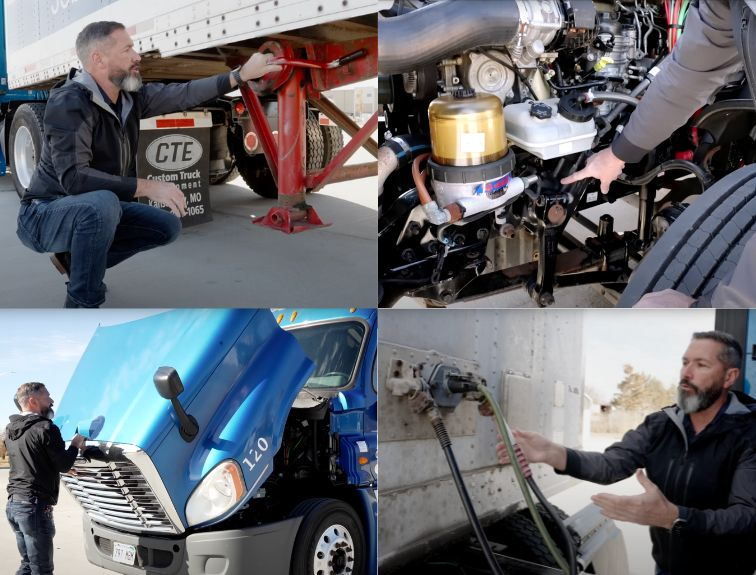
Regional trucking involves a different rhythm than long-haul trucking. Short routes, numerous docking experiences, quick meetings, and returning to the terminal at the end of work-camp course create a workday where compliance is tested almost every minute. To a regional driver, compliance is not only on one of these occasions that the inspect the vehicle. It is a daily business that starts every time before the engine fires up and ends only after the post-trip inspection has been carried out.
In this environment, regional driver compliance is built through repetition rather than reaction, where each shift reinforces the same disciplined process.
The theme of the article is daily driver checklists and engaging them in regional drivers to meet driver regulations, DOT expectations, and internal fleet standards. The concept is a practical application: how to stay compliant without doing paperwork or slowing the job down, while still aligning with core trucking regulations.
Why Compliance Is a Daily Discipline for Regional Drivers
The regional routing that drivers are more exposed to in enforcement is usually the longer time spent in traffic-dense areas, terminals, and customer places. The short hauls, yard moves, and compressed work cycles increase the number of decisions that fall under regional driver duties, making daily discipline essential.
On the other side, comparing with long-haul operations, regional work is a multi-compliance decision department and in a high-speed cycle. It is not common to skip a pre-trip inspection, rudely log update the daily log book, or neglect a minor defect. Still, these actions through the cumulative effect increase operational risk for the driver and the fleet, directly affecting overall fleet compliance.
It is the regularity, not the speed of coverage, that protects regional drivers.
Making Compliance a Work Process Instead of a Reaction
The most common violations do not come from drivers ignoring the rules. Instead, they come from behavior that is reactive. A structured compliance checklist transforms trucking regulations into habits that fit naturally into a regional schedule.
Trucking compliance checklist for owner-operators
Daily compliance not only assures road safety but also ensures accurate logs, simplifies inspections, and strengthens fleet performance. When compliance is embedded into the daily workflow, it supports driver accountability instead of being perceived as an interruption.
Starting the Day: Pre-Shift Compliance Awareness
Before turning the key, a regional driver should already have a working picture of the shift ahead. This includes route expectations, delivery constraints, and applicable driver requirements such as license validity, medical certification, and dispatch instructions.
Checking hours of service early is essential. Regional drivers often underestimate how short stops and facility delays consume on-duty time. Early awareness allows smarter decisions later and supports consistent compliance across the entire transportation checklist.
Pre-Shift compliance focus
| Area | Why it matters |
| HOS availability | Stops clock pressure later in the shift |
| Route awareness | Reduces unexpected detours or delays |
| Driver requirements | Ensures readiness before movement |
| Equipment status | Avoids mid-route surprises |
Pre-Trip Inspection: First Line of Defense
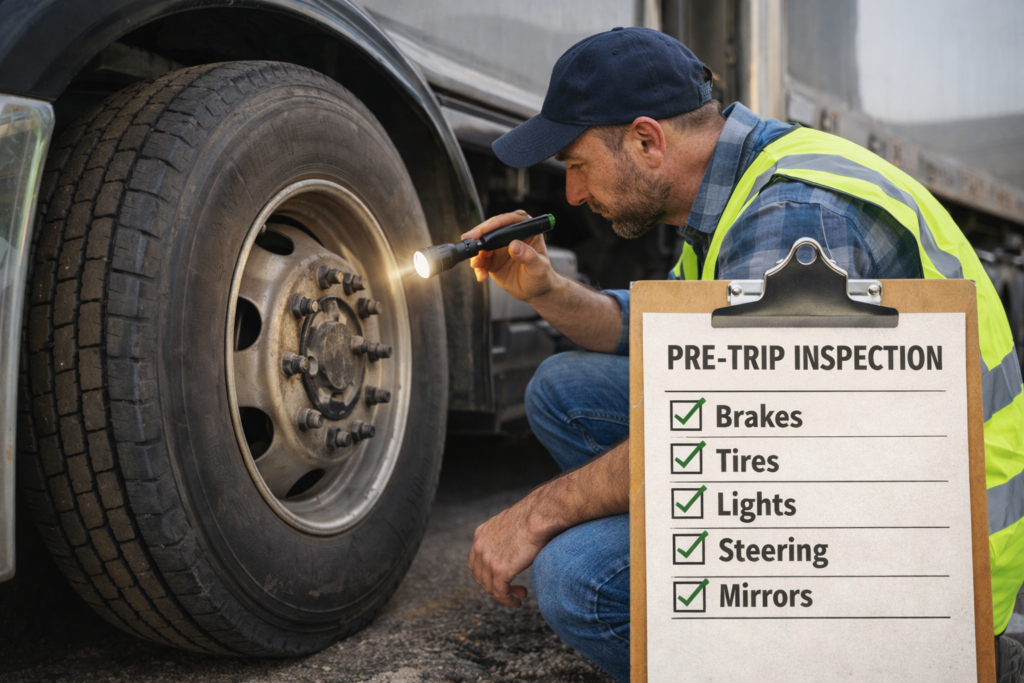
A daily vehicle inspection is the first formal compliance action of the shift and also a key element of commercial driver safety. Regional trucks tend to experience heavy braking, making turns, and parking often, which means they will wear out sooner than long-hauls.
Rather than rushing, regional drivers should look at the pre-trip as a safety checklist in terms of control and visibility: brakes, tires, lights, steering, and mirrors. These checks also form the foundation for ongoing road safety checks throughout the shift.
This inspection must be documented properly. The vehicle inspection log is not only a regulatory requirement, but it also aids the driver in avoiding liability in case of mechanical problems occurring later in the route.
Logging Discipline in Regional Operations
Regional driving requires more frequent changes in duty status than long-haul driving. Each delivery, wait time, yard move, and fueling stop affects the log.
Accurate entries in the daily log book of the actual activity ensure real events are logged rather than assuming. When all logs are correctly updated consistently throughout the shift, compliance is easier and inspections are less demanding.
Common regional logging pitfalls
- Starting on-duty too early
- Forgetting to update status after short stops
- Logging all waiting time as on-duty
These bad habits can be effectively avoided, strengthening driver accountability and minimizing unintentional HOS violations.
Driving on the Route and Staying Compliant
Compliance stays not only on the ground but also in the truck. Regional drivers should continue conducting informal road safety checks through the course by observing braking reaction, warning lights, and load stability.
These awareness checks that drivers perform keep small issues from increasing to roadside violations or inspection failures and help keep a practical and efficient transportation workflow.
Preparing for and Passing DOT Inspections in Commercial Truck Driving.
Time Management and Breaks in Regional Work
Regional shifts are shorter in time so breaks are taken sometimes less seriously. Breaks at the wrong time lead to interruptions in workflow and a decrease in productivity.
Time management strategies help regional drivers along the lines of syncing rest periods with fueling, congestion windows, or customer delays. This helps protect productivity, as well as safety, HOS compliance, and adherence to trucking regulations.
Post-Trip Inspection: Closing the Loop
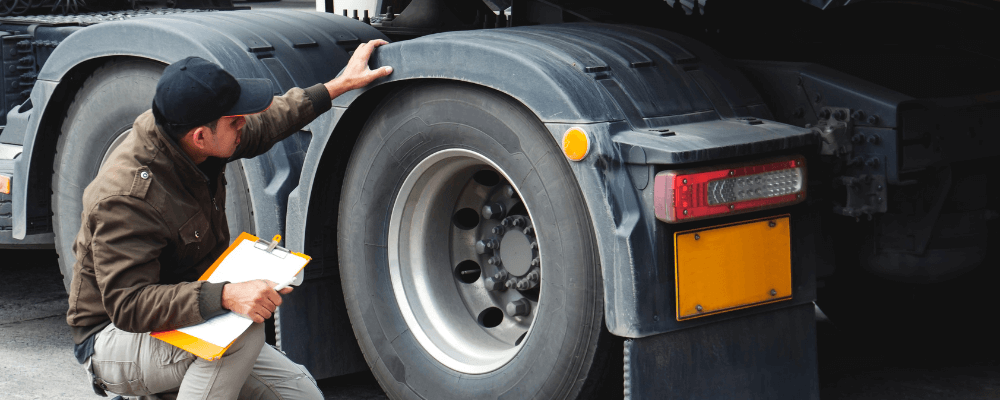
Completing the daily compliance cycle is only one part of the post-trip inspection, as it protects the next driver especially in shared equipment fleets.
An accurate defect report permits maintenance teams to respond proactively. Using good driver forms, even little issues become significant when reported in a systematic manner and contribute to long-term fleet compliance.
Value of post-trip inspection
| Inspection outcome | Operational benefit |
| Accurate defect reporting | Prevents repeat failures |
| Clean documentation | Supports DOT compliance |
| Maintenance visibility | Reduces downtime |
| Driver accountability | Builds trust within fleet |
Regional Transport Laws and DOT Compliance
Regional drivers work under the same federal rules as long-haul drivers, but regional transport laws affect routing, speed limits, and enforcement priorities.
There is no difference in DOT compliance, whether the journey is short or long. Standards are expected of the driver regardless of whether he covers 100 miles or 1,000. Understanding local rules limits inspections and helps in the smooth running of regional operations.
Driver Accountability and Fleet Compliance
Ultimately the compliance is in the cab. While fleets establish policies, driver accountability is what ensures the daily execution and consistency required for fleet compliance.
Drivers who follow a checklist consistently show professionalism and reliability. Over time, they build up fewer violations, stronger safety scores, and improve relationships with dispatch and management.
Daily accountability in action
- Accurate logs
- Completed inspections
- Timely documentation
These habits protect both the driver and the carrier.
A Practical Daily Compliance Structure
Practical compliance does not require memorization of regulations—it involves repetition and structure.
Daily compliance flow for regional drivers
| Stage | Compliance actions |
| Start of shift | Review HOS and route |
| Before movement | Complete pre-trip inspection |
| During route | Maintain log accuracy |
| End of shift | Perform post-trip inspection |
This structure keeps compliance predictable and manageable as part of a reliable transportation checklist.
Common Compliance Risks in Regional Driving
Most compliance issues develop gradually. Skipped inspections on “easy days,” delayed log updates, or ignored defects form patterns that eventually lead to violations.
Avoid these high-risk habits
- Skipping checks on short routes
- Delayed log updates
- Ignoring minor defects
Daily structure prevents these from forming.
Compliance Without Overload
Regional drivers already manage traffic, schedules, and customer demands. A daily checklist simplifies compliance by transforming trucking regulations into habits that reinforce consistency.
When each step is followed correctly, stress decreases and performance normalises.
Final Thoughts: Consistency Protects the Regional Driver
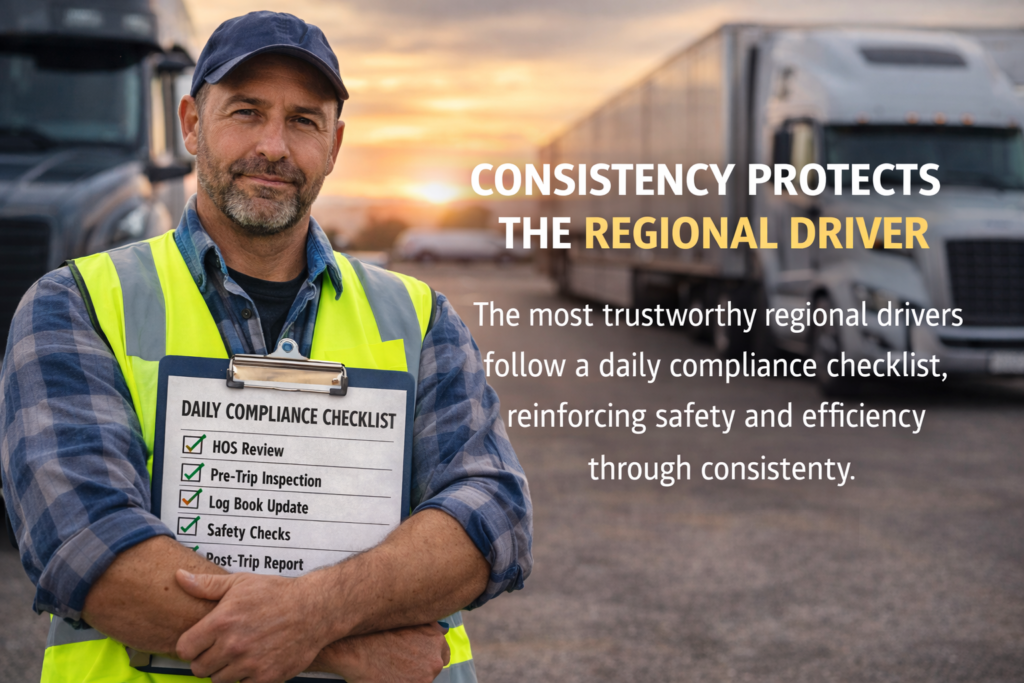
For regional drivers, compliance is not an occasional task but a daily routine. A clear, systemic daily compliance checklist strengthens regional driver compliance and functions as a dependable transportation checklist that supports safety, accountability, and operational efficiency.
Drivers who follow disciplined routines are confident and capable in the face of everyday requirements without disrupting their work.
In regional trucking, the most trustworthy drivers are not those who drive the fastest, but those who are most consistent.
FAQ: Daily compliance checklist for the regional driver
1. Why is a daily compliance checklist especially important for regional drivers?
Regional drivers make the most number of stops, have the most status changes, and move the least of any driver. This would mean more chances of new losses from the small compliance errors that might happen after 1 shift. The daily compliance checklist is a list of organized tasks that are done every day to prevent things like missed inspections, logging mistakes, and worsening decisions from happening.
2. How does a daily driver checklist support regional driver compliance?
A daily driver checklist is a way to make rules into something you do automatically. Drivers do not have to react to problems independently, they stick to their own sequence, and they handle regional drivers’ compliance through consistency rather than memorizing rules.
3. What is the importance of road safety checks in a regional shift?
Road safety checks are like a preemptive measure that helps drivers see early signs of load-related issues or mechanical problems while they are on the route. For example, by checking braking response, warning lights, and the behavior of the vehicle they can avoid roadside violations and unexpected breakdowns.
4. Can daily good habits really improve fleet compliance?
Yes, they can. The compliance of a fleet largely depends on how each driver drives. Correct records, inspections carried out, and excellent documentation being observed with different drivers would create a pattern that always brings good results and decreases the worry of an entire fleet’s inspection.
5. How is a transportation checklist different from just following regulations?
Trucking regulations tell what one has to do and are in the form of transportation material. However, transportation checklists explain what to do and when to do it in a literal workday. The checklist shows the rules that need to be followed in the daily tasks so that compliance can be better maintained in extraordinary cases like shortage of time.
6. Why do short regional routes still require full compliance?
The standards of compliance do not rely on the distance one might travel. Even on short routes, one would have to do inspections, logging, and to adhere to trucking regulations. Thinking of a short trip as “inherently low risk” usually leads to leaving out checks and causing violations that are higher.
7. What is the typical compliance mistake the regional drivers commit?
The most frequent mistake is the failure of the drivers to consider the small tasks seriously, such as delaying log updates and skipping inspections on “easy days”. Perpetually, these small habits counteract compliance more than a subsequent big error.
8. How can drivers stay compliant without slowing down their work?
Making a mistake results in future corrective action, so routine compliance sees to it that this does not happen. If drivers adopt the same checklist/sequence practices they will not spend extra time later fixing their mistakes at a much higher rate and they will have to face fewer interruptions from inspections or corrective actions.
9. Does compliance are related to road driver confidence?
Definitely, yes. The drivers who know well that they kept their logs, examinations, and the paperwork are all correct deal with tension far lesser than those who are uncertain/ unfocused. Security of mind around the fact that any upcoming inspection could happen because everything is systematically being done is high with them.
10 .Is compliance mainly a driver responsibility or a company responsibility?
Both. On the one hand, the company gives rules and takes care of the setup, while the driver is the one who is responsible for the daily activities. Whether compliance is sustained or not mainly rides on the adherence that the driver gives.
For regional drivers, compliance is not a fly-by-night task but it’s instead a constant character. Directly, a clean and systemic daily compliance checklist promotes safety, accountability, and operational efficiency.
Drivers who carry out their duties in a disciplined manner are capable of handling a few daily tasks without disrupting their work for the sake of it.
In the regional trucking industry, the most reliable drivers are not the ones who drive the faster, but rather the ones who are the more constant.
No responses yet