
Shifts at night are going to be a total surprise in the transport industry. Traffic is less intense than in the daytime, working hours seem detached, and tiredness acts in unprecedented ways that night drivers hardly ever come across. Nevertheless, one thing remains the same even in the dark: ELD and HOS compliance. To make it even more insightful, the most difficult ELD questions and HOS question where confusion is more prevalent come up during the night operations less time often there is confusion about the log book rules when operating at night, at the time when the body clock is against them.
For commercial motor vehicle operators, these challenges are even more pronounced, as CMV drivers often work independently during night hours with limited access to dispatch or safety departments.
For commercial vehicle drivers, driving at night frequently means going beyond midnight, switching from one duty cycle to another mid-route, creatively using sleeper berth time, or confronting delays caused by the closure of support services. These conditions create unique challenges for electronic logging device usage and hours of service rules interpretation.
The article provides clarification on the frequently asked questions about night shift ELD, night shift HOS, and logging requirements, not by theory, but bringing real-life examples of night-shift situations drivers are coming across in a week.
The Confusion That Night Shifts Create on ELD and HOS
Night shifts are not the introduction of new regulations, but they are a magnifier of the complexity in the existing ones. This is why HOS compliance night becomes more challenging and why night shifts compliance requires stricter attention to timing, breaks, and log accuracy.
The top three drivers’ reasons for dealing with night shifts in the wrong way include:
- Calendar days crossing during active driving windows
- Misunderstanding of daily limits resets
- Log inaccuracy due to fatigue
No access to dispatch or safety departments during off hours
In contrast to day operations, ELD night operations often emerge independently with little real-time clarifications.
Night Shift ELD & HOS: Where Confusion Starts
| Night Shift Situation | What Drivers Often Assume | What ELD & HOS Rules Actually Do |
| Crossing midnight while driving | New day means reset | Driving time continues accumulating |
| Starting late in the evening | Window adjusts to night work | 14-hour window runs the same |
| Fatigue-based pauses | Any rest stops the clock | Only qualifying breaks count |
| Limited dispatch access | Logs can be fixed later | Errors still count immediately |
| Quiet roads | More flexibility allowed | Rules apply the same regardless of traffic |
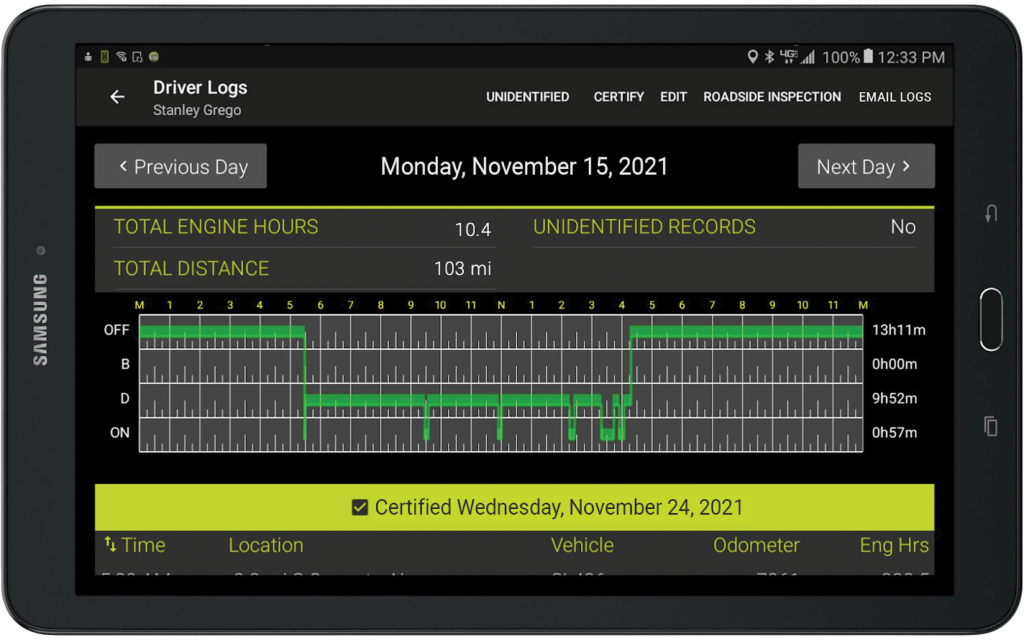
What About An ELD When Driving Over Midnight?
This situation generates some of the most common e-log questions among drivers who regularly operate through midnight hours.
One of the most asked questions about e-log is what happens if a driver is actively driving after the clock turns to midnight.
The electronic logging device does not have any automatic resetting of the system at 12:00 am. The ELD keeps recording the duty status according to the accumulated time not the calendar date. Nevertheless, the crossing of midnight may confuse the logs when you are looking at them later.
The crucial points key for driver logs at night:
- Driving time keeps running unintermittently
- The 11-hour driving limit should not be reset at midnight
The violations are applied based on the total accumulated time, not a date change
Many night shift ELD queries arise from drivers’ views of a new day. They think of it as a new start. In reality, it is not a case.
Is the 14-Hour Driving Window Different at Night?
No — it is the same as before. Although in a sense, it feels different.
The driving window begins when the driver first goes on duty after a qualifying break. Whether this occurs at 6 a.m. or 6 p.m. is no matter to the system. However, during the night shifts, drivers are:
- Late to start in the evening
- Cross midnight mid-window
- End the window early in the morning
This creates the illusion that the time was “lost” while sleeping overnight.
A significant reminder for law drivers trade during the night:
The 14-hour window continues to run whether the darkness, the fatigue, or the calendar changes.
How Do Sleeper Berth Rules Apply on Night Shifts?
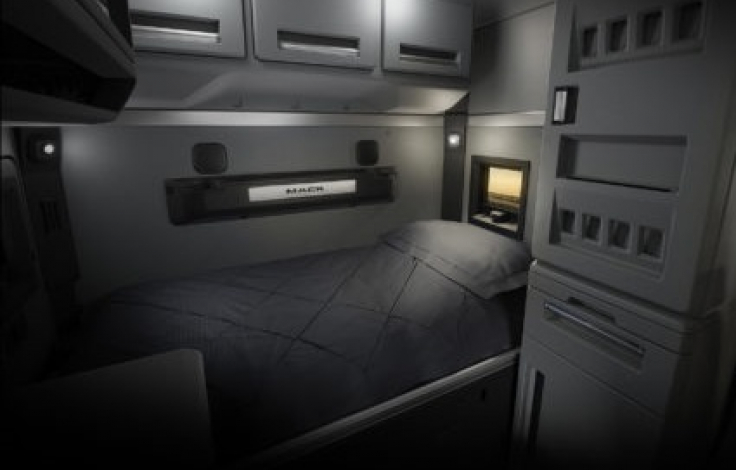
Sleeper rules are one of the most misunderstood questions of HOS, especially during the night shifts. Understanding how sleeper berth rules work in night operations is critical for managing fatigue without creating violations.
Drivers are likely to split their rest periods at night, to cope with fatigue, so the rules offer some flexibility. They only require it to be applied correctly.
The common mistakes night-shift employees make are:
- Thinking the sleeper time would pause 14-hour the clock
- Using short sleeper breaks without a qualifying pair
Forgetting how split sleeper time gives back the window
For commercial vehicle drivers, a key to the puzzle are sleeper berth combinations, which they need during the night when the constant rest isn’t possible.
Do Night Shifts Change the 30-Minute Break Requirement?
No. The 30-minute break requirement is the same regardless of the time shift.
But night driving raises the possibility of confusion even more, because:
- Breaks usually happen at unusual times
- Fatigue breaks get confused with compliance breaks
Drivers tend to think that the sleeper time counts, but it actually doesn’t
The rule is simple yet easily misapplied on night shifts after 8 cumulative hours of driving time a qualifying break is required.
This instead has been one of the most common HOS questions among overnight drivers.
How Are Daily Limits Affected by Night Driving?
Daily limits are based on the riding time that has been accumulated rather than on the clock dates. Night shifts very often give rise to the false feeling of exceeding limits as they imply logs for two different calendar days.
What counts in reality is:
- Driving time in total
- The up-time on duty
- The proper off-duty or sleeper time
Night driving does not cut your allowed time but fatigue may lead to errors in calculation which may be the reason the logging requirements seem stricter at night.
What About Drivers With Night-Shift Weekly Limits?
Weekly limits are one more place shifts at night confound.
If drivers consistently work nights, they may:
- Overlook how the rolling 7 or 8 day limits accumulate
- Misread recap availability
- Suppose that daylight hours affect resets
They don’t!
The ELD measures on-duty time cumulatively regardless of when work happens. Night shifts just make the tracking of those totals harder without using the system.
How Should Unassigned Driving Be Handled Overnight?
Unassigned driving creates some of the most crucial ELD questions, especially in night operations.
Common overnight scenarios are:
- Yard moves before dispatch logs in
- Shop or terminal movements
Emergency repositioning
At night, these entries may stay unclaimed for a longer time, thus increasing compliance risk if not reviewed.
The best practice for the night shift ELD use is:
To check unassigned driving entries at the start of every shift
To accept or annotate the entries immediately
Not to allow the entries to carry over multiple days
Is Personal Conveyance Allowed During Night Shifts?
The personal conveyance rules do not change at Nighttime, but they are more misused.
Drivers frequently assume that:
- Late-night travel equals personal time
- Empty roads allow for flexibility
- Fatigue justifies the use of PC
In reality, the personal conveyance is strictly defined and misuse can trigger a violation even if it was an honest mistake.
Night driving does not broaden the definition of what qualifies as personal conveyance.
How Do Adverse Driving Conditions Apply at Night?
Adverse driving conditions are the most controversial ELD questions that arise during night shifts. Night-time adverse driving conditions often require careful log annotations to justify any extension of driving time.
Night-specific issues come with chains that:
- Reduced visibility
- Unexpected road closures
- Weather conditions worsen after sunset
If the conditions are totally unforeseen and unavoidable, the exception applies. But, the predictable night factors (darkness, wildlife activity, routine congestion patterns) generally do not qualify.
This is one area where logs and driver documentation are incredibly critical.
Why Are Logging Errors More Common at Night?
Fatigue is a factor that people do not realize is larger than they think.
In the range of night shifts:
- The reaction time becomes slow
- Memory gaps increase
- Log edits get postponed
This leads to an accumulation of small mistakes. Many drivers think that the ELDs have to stop all the errors which are not true in fact. The devices only record the inputs or confirmations provided by the driver.
Common Night-Shift Logging Risks and Compliance Impact
| Logging Issue | Typical Night-Shift Cause | Compliance Risk |
| Late log edits | Fatigue and delayed review | Increased inspection scrutiny |
| Unassigned driving | Overnight yard or shop moves | Possible violations if not annotated |
| Missed 30-minute break | Irregular night schedules | HOS violation |
| Sleeper misuse | Incorrect split application | Driving window miscalculation |
| Incomplete annotations | Limited real-time support | Documentation issues during inspections |
How Can Night-Shift Drivers Reduce ELD and HOS Issues?
Realistic strategies for complying with HOS in night operations include:
- Reviewing the logs before the start of the shift
- Using ELD alerts instead of memory
- Rescheduling planned breaks to be before not later
- Making log reviews as a part of pre-trip routine
- Night driving is both a reward and a structure that is more than just flexibility.
Are Inspectors More Strict with Night Shift Logs?
Inspectors do not enforce different rules during the night, but unlike usual, night-shift regulations have a tendency to be checked more due to the prominence of certain patterns.
For example, the recurrently late edits, the many unassigned drives, or the inconsistent sleeper use are easier to spot when logs are distributed across several days.
This brings us to the point of clarity in connection with the drivers running mostly night schedules.
Final Thoughts: ELD and HOS during Night Shifts mastering
Night shifts are not the times of play-hour free driving — they are the best place for a driver to show how well they understood the rules.
Most of the ELD and HOS questions which are raised at night are not about very specific regulations, but about the application of the rules which are well-known, under conditions which allow little room for error. The combination of darkness, fatigue, and isolation very quickly shows the cracks in a driver’s habit.
In a much broader sense, mastering the night shift HOS compliance for truck drivers is not merely about remembering limited sleep, but also it is a good practice to trust the ELD device. Proper planning and listening to the body’s signals are also very important.
Night driving will always seem different. Compliance however doesn’t have to be that way.
No responses yet