Deciding on a large truck carrier or a small fleet is never just limited to pay rates or routes. For many drivers of all professions but let alone specifically for those who just start the journey the actual contrast is in the compliance management, regulatory training, and mismanagement they deal with throughout their careers. DOT compliance, hours of service rules, vehicle maintenance standards, and record-keeping expectations apply to everyone. However, the manner in which these prerequisites are imposed, clarified, and bolstered is entirely different-size dependent.
This article investigates the two sides of the case of compliance being easier to achieve and of regulations being easier to learn: whether it is a big carrier structure or a small fleet environment. Rather than promoting one of the models over the other, the approach taken is that compliance as it really is in the world of trucking is the central subject—and what drivers can realistically expect from both opportunities is this.
Seeing Compliance as a System Rather than as a Book of Rules
Compliance in truck driving is commonly misunderstood as a set of different isolated rules. In fact, this system of driver behavior, fleet safety culture, management oversight, installation and operation of the technology, training, and documentation discipline all belong to it. FMCSA and HOS regulations, CDL requirements, and vehicle standards do not change due to fleet size. What changes is the implementation and monitoring of those rules.
Big carriers and the small fleets possess the same federal laws but they build a compliance system in a really different way. These are very different forms and to understand them is essential for drivers in the know, trying to learn regulations efficiently and prevent complications in the long term.
Compliance System Structure by Fleet Size
| Compliance Element | Big Carriers | Small Fleets |
| Policy structure | Centralized and standardized | Informal and experience-based |
| Oversight model | Dedicated compliance departments | Owner or driver-managed |
| Error detection | Automated systems | Manual checks |
| Regulatory updates | Scheduled and documented | Situational and reactive |
Big Carrier Compliance: Design, Amplification, and Standardization
Big companies are run as the hierarchy. Their compliance programs are built to handle hundreds or even thousands of drivers, vehicles, and routes across multiple states. This scale enforces a structure.
Compliance Programs and Internal Controls
Big carriers usually have formal compliance departments devoted to DOT compliance, HOS monitoring, driver qualification files, and regulatory changes. These departments are the ones that keep track of FMCSA updates, that audit if the internal records are right, and that prepare for inspections. This is what the drivers have to do: they have to observe the simple and therefore strict compliance expectations.
Policies, procedures, and violations are documented, standardized, and tracked respectively by the centralized systems. Such a strict organization may appear suffocating but it greatly reduces ambiguity.
Technology as a Compliance Foundation
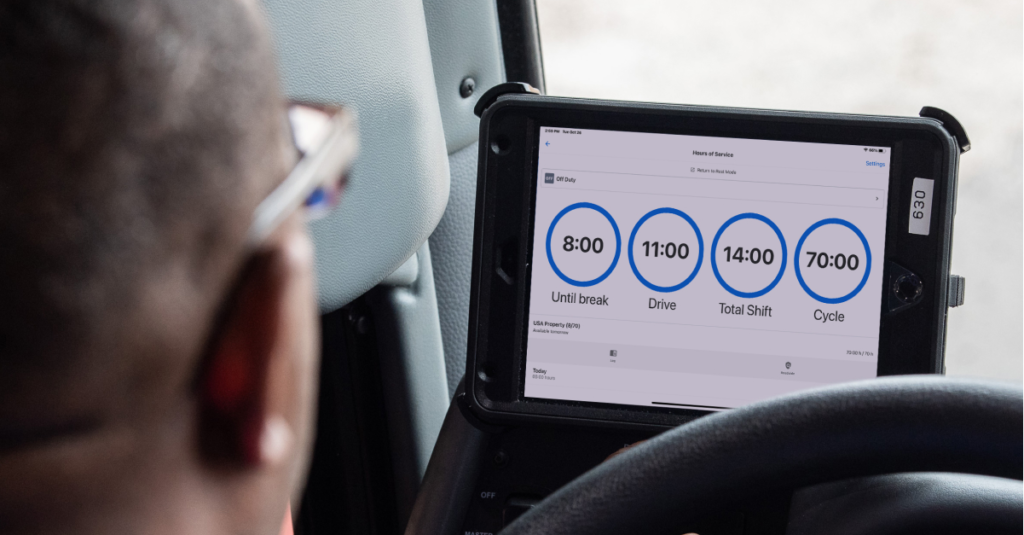
Large fleets are heavily dependent on compliance technology. The use of electronic logging devices, automated vehicle maintenance scheduling, digital record-keeping, and real-time HOS monitoring are standard. While the systems are reducing the amount of manual errors they limit the flexibility as well.
For entry-level drivers, advanced technology is a huge plus. HOS compliance becomes visible and measurable. Alerts take the place of guesswork. Misnomers are caught early on that, often, make them come to the attention of the driver before violations occur.
However, technology can also masquerade understanding. The mechanical robots may be a solution for the drivers who do not need to take the time to really understand the rule mechanics.
What Big Carriers Typically Standardize
- Hours of service monitoring and alerts
- Vehicle maintenance scheduling
- Driver qualification file audits
- Internal safety scoring systems
- Enforcement frameworks tied to a commercial drivers license
Training and Learning Regulations in Big Carriers
Entry-Level Driver Training
Big carriers are committed to investing in entry-level driver training. Structured onboarding programs, classroom sessions, simulator training, and supervised road time are common activities. Trucking school compliance standards are often integrated into carrier training pipelines.
The setup is advantageous for drivers who thrive on structure, repetition, and clear instruction. The regulations are explained logically rather than informally.
Ongoing Compliance Education
Many large carriers require periodic HOS refresher training, regulatory updates, and safety procedures. By doing this, drivers keep in touch with the changing FMCSA regulations.
One of the problems is that the training is very general and does not allow for those drivers who do not have the same way of learning.
Small Fleet Regulations: Autonomy and Personal Responsibility
Small fleets are in the same regulatory bind but lack corporate-level architecture. There is a more personal dimension to compliance in small fleets — and they are exposed.
Direct Oversight and Informal Systems
In small fleets, the micromanagement style of data entry, billing, and maintenance tasks is prevalent. Driver, dispatcher, or small management often are the ones responsible for compliance. The vehicle maintenance and record-keeping impacts their everyday work as they have fewer tools and redundancy in the system.
That flexibility is a desirable feature. Often drivers can interact directly with those who have the power to make decisions. Compliance-related questions can be tackled in real-time without forms or manuals.
The problem with flexibility is that it is a double-edged sword. Informal systems are significantly influenced by individual adherence and knowledge. It is possible to have unregistered informal paradigms.
Training and Learning Environment Comparison
| Aspect | Big Carriers | Small Fleets |
| Training format | Formal programs | On-the-job learning |
| Rule explanation | Structured instruction | Experience-driven |
| Error tolerance | Low | Variable |
| Learning consistency | High | Dependent on mentor |
Learning Regulations in a Small Fleet Environment
Learning by Taking Charge
Small fleets frequently require drivers to take individual responsibility for compliance. Drivers might, for example, control their logs, monitor maintenance problems, and account for documents with less supervision.
In some cases, this leads to them learning faster. Regulations get a practical rather than abstract form. The consequences of making errors are felt immediately.
Meanwhile, for entry-level drivers, working in such an environment could be quite taxing. Learning the regulations can be hit and miss without any structured training, and this can have serious consequences in a very regulated industry.
Inconsistent Training Standards
Small fleets often lack formal training programs unlike big carriers. Knowledge transfer may be through experience, peer guidance, or informal instruction.
This can either lead to the creation of highly skilled drivers or those with areas of ignorance. The effectiveness of compliance education is highly dependent on the instructor.
Common Compliance Risks in Small Fleets
- Incomplete understanding of regulatory updates
- Informal or inconsistent logging habits
- Delayed maintenance documentation
- Overreliance on personal judgment
- Limited internal audit preparation
Hours of Service and HOS Compliance: Different Pressures
HOS compliance is one of the most noticeable differences between a small and a big carrier.
Big Carrier HOS Management
Large carriers keep a close eye on hours of service. Automated systems are able to warn possible violations well on time. Dispatchers are educated to work within the compliance lines. Drivers are seldom allowed to handle HOS on their own.
This way, violation risks are reduced but the flexibility is limited. Drivers may feel they are being micromanaged.
Small Fleet HOS Challenges
In small fleets, HOS compliance may rely more on driver judgment. While this can allow for creative scheduling, it does increase risk particularly under regulatory shifts.
Drivers must not only know how to log hours, but to also understand the importance of choices made during inspections.
HOS and Maintenance Exposure
| Area | Big Carriers | Small Fleets |
| HOS monitoring | Automated | Driver-managed |
| Maintenance strategy | Preventive | Reactive |
| Inspection readiness | High | Variable |
| Documentation audits | Routine | Occasional |
Preventive Maintenance and Regulatory Exposure
Maintenance Programs in Big Carrier
Large carriers follow scheduled maintenance programs. This means that vehicles are examined regularly and records of maintenance are centralized. Therefore, the compliance is supported, and the roadside inspection is reduced. The drivers usually submit their problems through digital means which also explains the lesser involvement of drivers in maintenance decisions.
Maintenance in Small Fleets
Small fleets may figure out that the maintenance work is of a more reactive nature than being preventive. Drivers may also take a more participative approach by noticing issues and fixing them. Though this practical step helps in raising the mechanic’s awareness, it also opens the door to more compliance exposure due to incomplete records or delayed fixes.
Record-Keeping and Documentation Discipline
Compliance is not only about being well-behaved, but it is also about how you document your activities.
Big carriers are always keeping extensive digital records. The driver’s qualification files, maintenance logs, and training records are audited internally.
Small fleets may have simpler systems. This effectively lowers the administrative burden but increases the pressure on the sectors of consistency, for example, where paperwork is missing and thus dangerous.
Biometrics and Adaptability Speed
FMCSA rules an ever-changing climate by keeping up with updates which is crucial for the smooth running of a fleet.
A common concern in fleet safety would be lack of control around employee behavior which would in turn affect company liability, and thereby truck insurance.
Fleet Safety Culture: Rules or Mindset
Culture hugely influences compliance.
Big carriers employ a fleet safety culture via policies, metrics, and incentives. So, safety is quantified and enforced.
Small fleets tend to trust personal responsibility. The culture is built by the example of leadership rather than through formal initiatives.
No one of these strategies is weak or broken right through the start. However, the dislocation between culture and driver expectations is bound to create challenges.
Where Is Compliance Easier?
Complying is much more manageable in places where the systems naturally override human error. To that, no doubt, big carrier compliance is more extensive. Blunders are caught in the initial stages. There is no technique that is not taught. The technology that is deployed ensures consistency.
On the other hand, small fleets require a higher level of individual capacity. They might have compliance but it is not so merciful.
Where Is It Easier to Learn Regulations?
Learning the regulations right is mostly approved of the driver.
Drivers should do well to be orderly, repeat, and learn the processes in the formal education of big carriers.
Drivers, straight away learning by fulfilling exercises and practical-session-based on their feelings, do better in small fleets — but only as long as they have mastered the compliance core before that.
Identifying the Right Approach
There is no stamped answer. Big carriers are the stable ones while they bring safety to the environment. On the contrary, small fleets are vehicles that build trust in sharing the dashboard with a driver.
For those new to the industry, large carriers provide a major benefit in the more guided compliance path. For seasoned drivers seeking freedom, small fleets can offer an enrichment opportunity.
The pivotal aspect is conceiving that compliance is not purely about rule following. It is a question of understanding the interrelations between systems, decisions, and documentation.
The Lesson is Compliance Skill, Not Size
The large carriers and the small fleets are under the same obligations, but they teach compliance in a different way. One is all structure and scale. The other relies on responsibility and experience.
The drivers who realize this can select the environment that is in sync with their learning styles and helps them with their career goals. In the trucking industry, being compliant is a must-have skill and teaching it correctly is what a driver gains the most from fleet size-independent.
Additional Perspective: Compliance Challenges and Learning Resources

From a practical standpoint, trucking compliance challenges are shaped not only by fleet size but also by driver management practices, fleet management maturity, and access to carrier resources. Big carriers typically provide structured compliance programs supported by technology and dedicated staff, while small fleet regulations place greater emphasis on individual responsibility and situational judgment.
For drivers holding a commercial driver’s license (CDL), especially those coming from trucking school compliance environments, large carriers often offer a smoother transition through familiar training frameworks. Small fleets, by contrast, may accelerate learning regulations through direct exposure but demand stronger self-discipline to maintain truck safety and documentation standards over time.
No responses yet