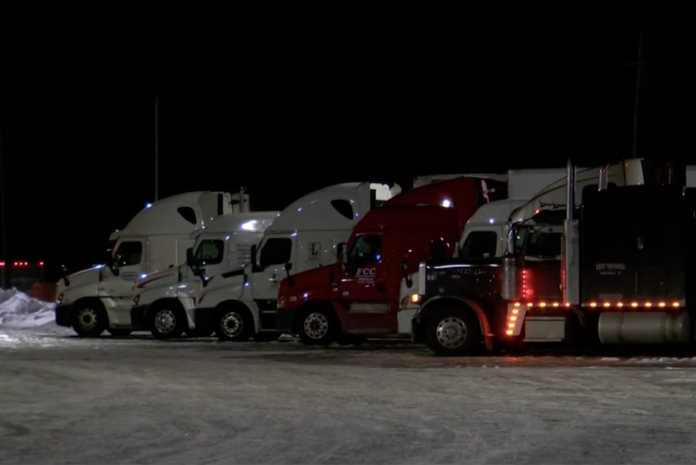
Safe winter operations in trucking continue beyond the wheels closing. Parking trucks in winter settings, particularly in crowded truck stops and rest areas, where snow and ice accumulation occurs parallel to warm weather congestion makes it one of the most unnoticed hazards. A truck driver’s incorrect parking decision can trigger things like frozen brakes, unaffiliated trailers, fuel system troubles, or at worst injuries. For drivers, conscious safe truck parking is in fact the link between winter driving and truck safety, it is not a pause from driving.
Winter parking entails pre-planning, situational awareness, and consistency. Viewing parking as an interactive safety phase rather than a downtime is a practice that really helps in loss prevention of equipment, cargo, and driver well-being during cold-weather operations.
Selecting Safe Parking Spots in Heavy Snow
Rest or truck stop parking is under the umbrella of mostly popular safe or unsafe winter areas. By far, the biggest difference shows up in driveway snow removal service, illumination, shipping rate, and streetwork diversion. In a cold environment, the significance of these differences largely exceeds any comfort.
A good winter truck parking choice starts with surface management: plowed lanes, visible markings, and enough room for big truck parking without tight turns.

Common factors drivers evaluate when choosing winter parking:
- snow and ice removal frequency
- lighting coverage for night visibility
- space availability for semi truck parking tips
- distance from main traffic flow
A location that is properly maintained and bright well-lit truck parking can act as a perfect taking off point for the driver to evaluate ground conditions, to spot icy patches, and finally to perform a proper startup. The light will also protect them more against potential dangers from passengers during overnight parking and it will cut the accidents down because of low visibility. Singularly designed truck parking areas are safer than these intermingled with other vehicles since those add unplanned traffic to the area.
Drivers also need to be observant on the geometry of parking lots. A location layout with tight, sharp turns poses the possibility especially for truck parking of the trailer being swung over ice. In contrast, winter is the time when the function of wider spaces and predictable traffic patterns comes to the forefront of conflict and injury reduction.
Getting to know winter parking rules and neighborhoods related to them
Winter is the season that alters, on a temporary basis, the parking availability and enforcement. Oftentimes, temporary designated snow parking areas must keep some areas off-limits at night to allow snow removal or emergency crews access. Sometimes areas redirect to trucks that are usually marked with a snow route sign like in the occurrence of a storm.
Snow parking regulations can shift overnight during storms, so truck stop parking plans should account for temporary closures and reroutes shown on snow route signs.
Typical winter parking restrictions drivers encounter
| Situation | Impact on parking |
| Active snow removal | Temporary closure of parking rows |
| Emergency weather alerts | Restricted overnight parking |
| Snow route activation | Mandatory parking redirection |
| Ice control operations | Limited entry or exit access |
Failure to comply with these rules can result in fines, vehicle removal, or being blocked in by the snow removal machinery. Winter parking safety requires the observance of the signboards and the flexible attitude when situations change. Making early stop plans by drivers can prevent snow movement operations from creating conflicts.
Positioning Truck to Minimize Winter Hazards
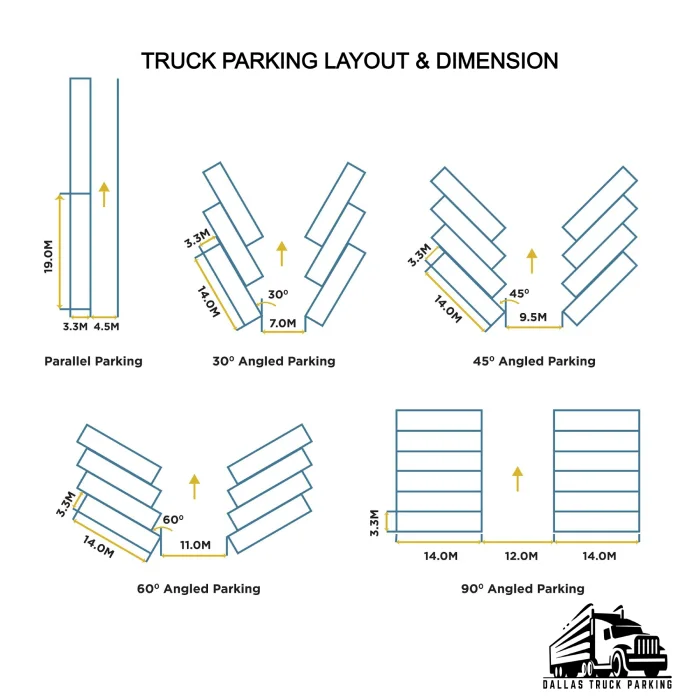
Correct positioning is one of the most effective winter semi-truck parking tips. For instance, a forward exit parking that mimes the truck pulling straight ahead is very effective in passing on slippery surfaces. Backing movements ask for more traction resulting in jackknifing or trailer drift.
Forward exit parking is a simple habit that improves safe truck parking when traction is limited and visibility is reduced.
As a rule, drivers should choose a position that is not on a slope. Even small inclines turn them to be rather hazardous when the effect of ice is overnight. The level ground provides stability and the need for less reliance on braking which may freeze or lose their holding power in extreme cold.
Despite it being equally important, the primary issue is distance. A distance that is equal or twice as much as the safety clearance allows for a slow departure and reduces the chance of hitting a vehicle because of loss of traction caused by the driver maneuvering.
Detecting ice and other hidden perils on the ground
Snow is the known enemy of smooth and even surfaces. Curbs, pavement, and drainage channels are often concealed. Drivers with experience soon get to it and avoid the icy spots by interpreting surface signs like polished tire tracks, shaded areas, and refrozen slush. These threats, even more, become treacherous near trailer landing gear and legs.
Before setting brakes for overnight truck parking, scan the pavement to avoid icy spots that form near drains, shaded corners, and refrozen tire tracks.
To prevent problems, trailers often depend on the hardness and high ground under the landing gear. Thus, it is better to avoid the need to park on soft snow or thawing ice leading to trailer settle frame or re-coupling difficulty. This attention directly supports trailer parking safety in winter conditions.
Emergencies and accidental winter parking incidents
Regardless of planning, emergency truck parking scenarios can arise. Some might be due to abrupt road closures, poor weather, or the hours-of-service regulation that may force drivers to park sooner than they expect. But in these situations, the safety of every person comes first.
Emergency truck parking should still aim for secure winter parking: choose well-lit truck parking when possible and keep a clear pull-out path.
Emergency winter parking priorities
| Priority | Reason |
| Visibility | Reduces collision and slip risks |
| Surface stability | Prevents trailer shift |
| Exit path | Allows safe departure |
| Distance from traffic | Protects truck driver safety |
Indeed, the most appropriate and sure decision might be the safest available option taken—not the forward push. Shoulders and ramps should only be used if they are clearly designated for emergency use. Putting the lights on hazard skip the use of high traffic paths which helps in more than one area.
Dealing with Overnight Parking in Great Cold
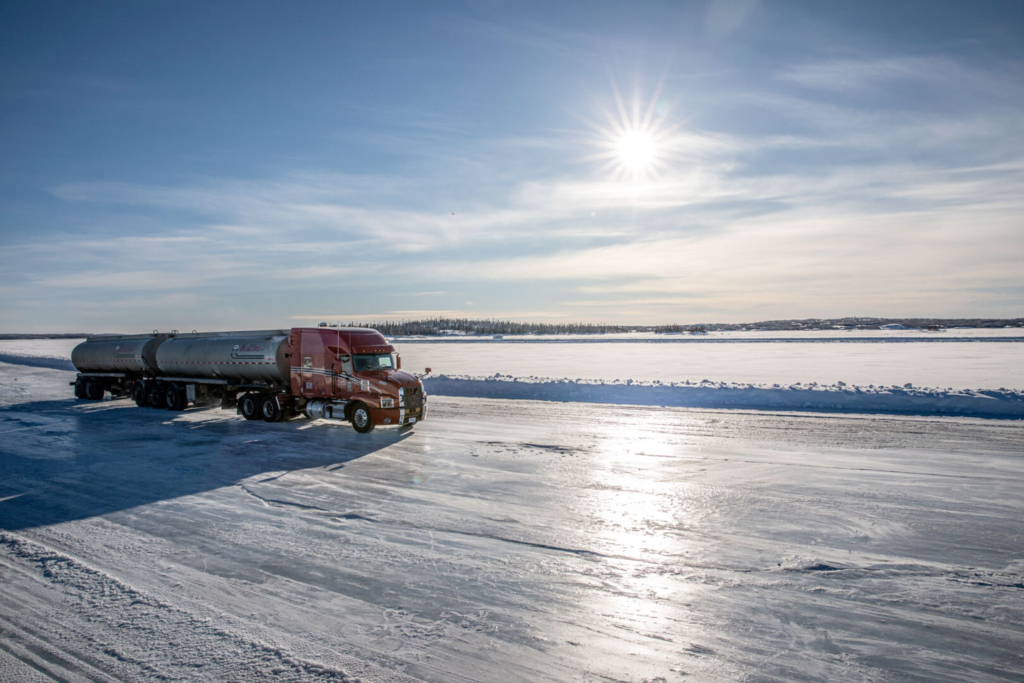
Winter overnight parking comes with added risks due to the low temperatures. The normal bag parts could get iced up. Drivers should first battle with the vapor barrier and should also assess how long the unit will be stationary for. Things like systems for fuel, air, lines, and batteries should also be addressed besides protecting them.
Cold weather parking is also truck winterizing in practice—short stops can become long ones fast, so keep a winter prep checklist mindset.
Furthermore, cold-weather parking is troublesome on vehicles that are unprotected from wind. Windbreaks can be applied to parking environments when they are safe and allowed. In the morning, the heat loss will be less and the reliability of cold starts will be better.
Air management and brake chambers during winter parking
Cold temperatures, in turn, can increase the likelihood of moisture freezing inside air systems. Maintenance of the braking system becomes crucial after driving through wet snow and freezing rain. Parking that does not allow air systems to dry can lead to frozen brakes and hence no movement later.
Brake system maintenance matters most after slush runs; moisture in air lines can freeze and turn a normal stop into a forced layover.
The word is out that experienced drivers get into the habit of just doing their few air system purges before parking and they completely avoid unnecessary brake applications once they are stopped. These new habits eat the time and get rid of the frozen components on those long winter stops.
Winter shutdown strategy and fuel system maintenance
Fuel system maintenance is one of the most important aspects of cold weather parking. When low fuel levels are left untreated, fuel gelling causes a truck to become immobilized for the night. It is a good idea for drivers to use the right winter additives and not to park with the tanks almost empty when there is extreme cold weather.
Fuel system care is part of downtime prevention: treated fuel and stable tank levels reduce cold-start failures and protect driver safety.
Checking the fuel level when parking becomes part of planning it confidently and therefore makes it reliable and yer long pants won’t be due to cold start issues.
Tires, chains, and parked stability
Tire preparation and chain installation are the first thought that crosses one’s mind but tire quality is also the first influencing factor affecting driving. In winter, the weather will create pressure problems in the tires. Tires that will be parked for a longer time are more likely to get flat spots during this period. Chains that freeze solid cause a danger especially when the snow is packed and it can break off the chain.
Tire and chain prep should be checked before shutdown, not in the morning rush—chains packed with snow can freeze solid overnight.
Winter Maintenance as Parking Safety
Trucks winterization does not end when the engine is turned off. Parking is often the time multitudes of snow related problems arise. A brief post-park inspection enables the driver to detect leaks, ice buildups, or battery issues early.
Winter maintenance is not only shop work; it includes quick inspections during rest area parking stops to catch leaks, ice build-up, and weak batteries.
Routine winter maintenance increases the likelihood of proper air exposure without damage and thus avoids parking problems. Parking safety and maintenance reliability have a hidden connection.
Personal safety and visibility during winter stops
Driver safety should be a priority all the time, even when the truck has been parked. The act of getting out of the cab onto the icy surface carries a high risk of slips and falls. The three points of contact method, the appropriate footwear, and the deliberate movement are the most important habits.
Simple actions that support truck driver safety:
- exiting the cab slowly on icy surfaces
- wearing footwear with winter traction
- parking in visible, well-lit areas
- avoiding walking near refrozen slush
Parking in secure winter parking areas with lighting and foot traffic also reduces personal safety risks during long winter nights.
Establishing a Dependable Winter Parking Habit
Throwing consistency in the truck parking routine, that will help the drivers beat their fatigue and will not let them leave anything undone. Conformity creates a predictive factor in the unpredictable conditions. The habits will avoid errors amid winter stress levels that are so high.
A consistent truck parking routine reduces mistakes: same order, same checks, every time, even when the lot is crowded and weather is worsening.
Parking as part of winter driving safety
Winter safety does not stop at engine shutdown. Providing the correct answer for the truck’s parking is also part of the winter driving safety. Proper parking decisions will reduce morning dangers, protect equipment, and ensure operating readiness.
Winter driving safety includes where you stop: safe truck parking reduces freight risk, limits vehicle damage, and keeps departures controlled in the morning.
Drivers that treat parking as a tactical decision and not an afterthought get fewer incidents related with winter all the time.
Final Takeaway
The ability to secure winter truck parking at truck stops and rest areas is a vital trucking competency. Each decision, from selecting a well-lit truck parking to managing fuel system care, brake system maintenance, and secure winter parking, contributes to overall safety.
Driving becomes a reward to those who plan ahead, find the proper parking space, and adhere to disciplined routines. In cold-weather trucking, smart parking is neither optional nor a luxury—it is a part of the profession and a means of survival.
No responses yet